
Safari Excursions – Epic Outback To Tropics Expedition
Experience the ultimate Australian adventure on this 12-day journey from Uluru’s spiritual red centre through the rugged outback to Darwin’s tropical wilderness. Students will traverse diverse landscapes from ancient deserts to wetlands, encounter unique wildlife, swim in thermal pools, explore Aboriginal rock art galleries, and witness the raw power of saltwater crocodiles. This transformative expedition showcases Australia’s incredible natural and cultural diversity across thousands of kilometres of unforgettable terrain.
Tour Details
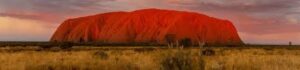
Starting at Uluru and finishing at the top of Australia, this tour will show you Australia’s outback in all its splendour. From the magnificent ‘Rock’, to cruises in Katherine Gorge and Yellow Water Billabong, Kakadu and finishing in the Northern Territories capital city, Darwin, everyone will go home from this tour with a life time of memories.
Safari Tours
Highlights include:
- Uluru (Ayers Rock)
- Kata-Tjuta (The Olga's)
- Kings Canyon
- ANZAC Hill Lookout
- Alice Springs
- Simpsons Gap
- Standley Chasm
- Dot Painting
- Telegraph Station House
- Mindil Beach
- Daly Waters
- Mataranka Thermal Pools
- Katherine Gorge
- Crocodylus Park
- Noulangie Rock
- Warradjan Aboriginal Cultural Centre
- Devil's Marbles Conservation Reserve
Highlights
Kata Tjuṯa National Park (officially Uluṟu-Kata Tjuṯa) in Australia’s Red Centre is a spectacular World Heritage-listed landscape.
Aṉangu welcome you to Uluṟu-Kata Tjuṯa National Park, a living cultural landscape where earth and memories exist as one. More than just a photo opportunity, the iconic rock formations hide ancient wisdom and diverse plant and animal life.
Look closer to discover an awe-inspiring environment where Tjukurpa whispers the creation stories.
Guided Tour – Uluru
You will be joined on-board your coach by an Accredited Guide (plus an Anangu, for extra cost), who will take you on a tour around Uluru including Muṯitjulu Waterhole. Located on the eastern side of Uluru, it is one of the few permanent water sources around the base of the rock and features stunning surrounding rock art. It’s a serene, shady area accessed via the short, 1 km Kuniya Walk. Swimming is not permitted, as it is a deeply significant cultural
Mala Walk (Self-guided)
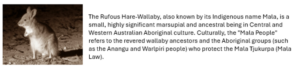
The Mala Walk is an easy, 2 km return trail at the base of Uluṟu. It takes about 1.5 hours to complete and leads to the spectacular Kaṉtju Gorge. Along the path, you’ll see ancient caves, Aṉangu rock art, and learn the cultural history of the Mala (rufous hare-wallaby) people.
Uluru-Kata Tjuta Cultural Centre
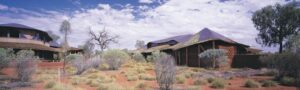
Gain an understanding of the spiritual significance of the Kata Tjuta to traditional owners and see how the land furnished them with food, fuel, weapons and medicines. Learn how women and children collected bush foods like desert raisins, bush plums and native figs, and how men used spear throwers to hunt goanna and red kangaroos.
Art Galleries
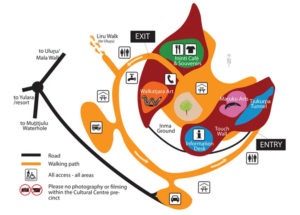
Uluṟu-Kata Tjuṯa National Park has two galleries showcasing Aṉangu art and crafts – Maṟuku Arts and Walkatjara Art:
Maruku Arts Gallery: A visit to the Maṟuku Arts Gallery (Puṉuku Ngura) at the Uluṟu-Kata Tjuṯa Cultural Centre gives visitors the chance to experience the diverse art from the centre of Australia, while gaining an understanding and appreciation of Ngaanyatjarra, Pitjantjatjara and Yankunytjatjara cultural practices.
The Gallery is home to handcrafted puṉu (traditional wood art, tools, and weapons) and other artistic works that are sourced from more than 500 artists, from over twenty remote Aboriginal communities and Homelands across the Central and Western Desert region, including the local Muṯitjulu community.
Walkatjara Art: Walkatjara Art is Muṯitjulu Community’s Art Centre, owned and directed by Aṉangu. The name Walkatjara is a Pitjantjatjara/Yankunytjatjara word. ‘Walka’ means ‘designs, meaning marks’ and ‘tjara’ means ‘having’.
Walkatjara is located at the Cultural Centre in the Uluṟu-Kata Tjuṯa National Park. Visitors are welcome at the Art Centre to see artists at work and learn about Aṉangu Culture and the stories behind the paintings. By purchasing artworks from Walkatjara, visitors directly support the Muṯitjulu community.
Tjukurpa Tunnel
As you approach the entrance to the Tjukurpa Tunnel, you will be surrounded by the sound of the winds created by Uluṟu and voices chanting inma (ceremonial songs).
Entering the tunnel transports you back to the beginning of time. It features Aṉangu art, and explanations of Aṉangu law, traditions and appropriate behaviour.
Entering the tunnel transports you back to the beginning of time. It features Aṉangu art, historical documentaries, and explanations of Aṉangu law, traditions and appropriate behaviour.
For cultural reasons, no photography is allowed in the Tjukurpa Tunnel.
The Tjukurpa Tunnel is a self-guided experience. Keep quiet and take your time to understand the depth and breadth of the lessons taught here.
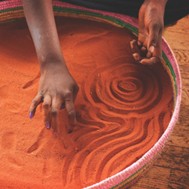
Sunset Nibbles & (soft) Drinks
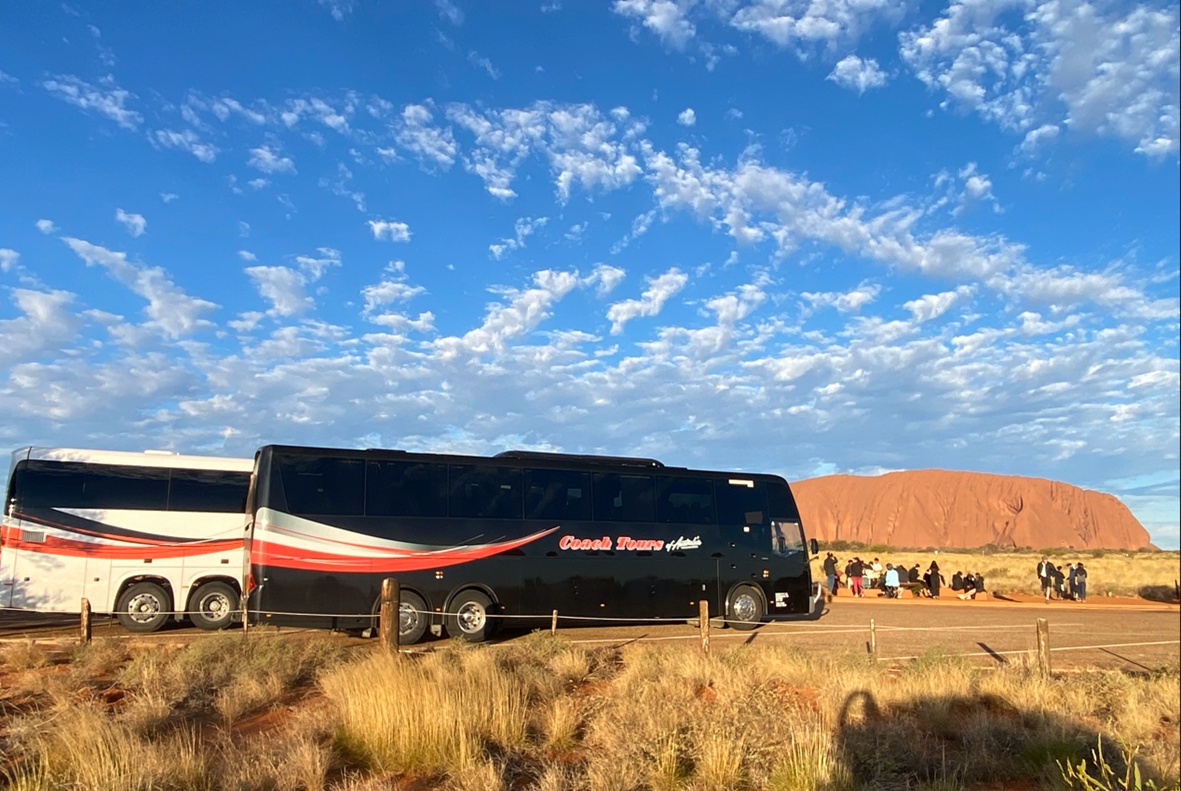
Something that cannot be missed during your visit to Uluru, is the changing colours of the ‘Rock’ at sunset. Marvel at the Rock, as it turns different shades of red, orange and purple.

Outback Cycling (limited number of bikes available – larger groups will need to be split)
The Uluru Bike Ride lets you experience all that Uluru has to offer. In your own pace and time, discover ancient rock art and wonderous waterholes around the base of Uluru. The Outback Cycling Uluru Bike Ride is one of the best-value activity options at Uluru!
They are located in the Uluru-Kata Tjuta Cultural Centre car park in the Uluru-Kata Tjuta National Park.
Uluru Camel Rides
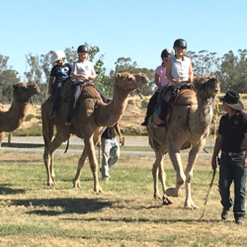
What to add something different to your Itinerary, why not visit Uluru Camel Rides. Depending on your price point, they offer an ‘Education’ package (which doesn’t includes a camel ride) or a camel ride can be organised with them (they have a limited number of camels, if you are a larger group, please keep this in mind when looking at timings).
Wintjiri Wiru
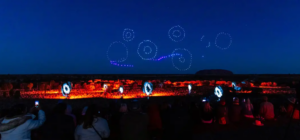
Wintjiri Wiru, meaning ‘beautiful view out to the horizon’ in the local Pitjantjatjara language, is a breathtaking cultural storytelling experience that brings to life a chapter of the ancestral Mala story through choreographed drones, lasers and projections that illuminate the night sky.
A story passed on for thousands of generations, now passes to you.
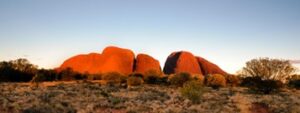
The Olgas (officially named Kata Tjuta) are a spectacular cluster of 36 giant red sandstone domes in Australia’s Red Centre, located about 35 km west of Uluru in the Uluṟu-Kata Tjuṯa National Park in the Northern Territory. Meaning “many heads” in the local Aboriginal language, the sacred site is estimated to be 500 million years old.
The self-guided walks suggested at Kata Tjuta are:
- The Valley of the Winds: A challenging 3- to 4-hour circuit walk offering breathtaking, Mars-like views of the domes and lookout points.
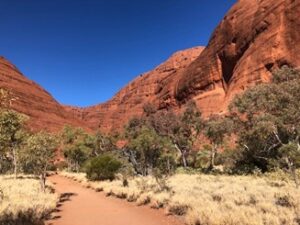
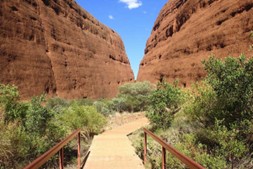
- Walpa Gorge: A shorter, 2.6 km return walk that takes you deep between the towering conglomerate walls of Kata Tjuṯa.
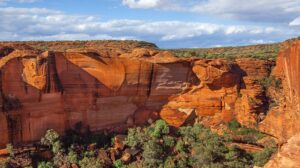
Kings Canyon, located in the Northern Territory within the Watarrka National Park, is a massive 270-meter-deep chasm featuring 100-meter-high sheer sandstone walls, ancient palm-filled crevices and a ‘Garden of Eden’ waterhole.
On visiting Kings Canyon, you can choose from a number of walks, all differing from reasonably easy to the more difficult ‘Rim Walk’. the Rim Walk is the most famous and spectacular of the walks. The first part of the walk is an ascent of 1000 steps, with several places to stop and rest, however if you take it slow and easy, you’ll find that the rest of the walk is pretty easy going, once you’ve reached the top!
Lilla Community
Lilla is an aboriginal outstation community located in the Watarrka National Park. In the native tongue of the Luritja country, Lilla means ‘sweet water’. If you visit Lilla you will get a chance to drink the best tasting water that has been filtered through the Mereenie sandstone from underground springs.
On arrival you will be taken on a 4 cultural activity session which includes a cultural welcoming ceremony performed by the traditional land-owners (the Luritja people), learn how to use traditional hunting weapons (like the boomerang), learn to paint in the traditional Luritja way and much more.
The highlight for most schools, when visiting Lilla, is the opportunity to spend time with the children of Lilla – it’s a highlight for them as well!
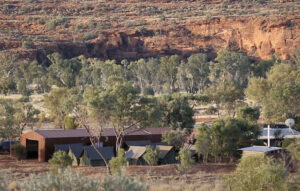
Karrke Aboriginal Cultural Experience & Tour – 1 hour tour
Karrke Aboriginal Cultural Experience and Tour is a business owned and operated by First Nations people, established in 2014.
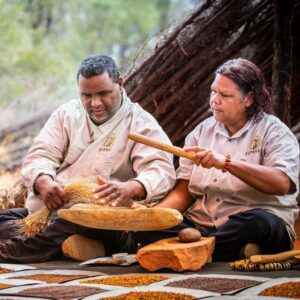
Their cultural tour consists of a one-hour walk and discussion. They provide visitors with insights into their rich cultural history, language, and customs as handed down through generations of the Luritja and Pertame (Southern Arrernte) desert peoples. The tour features shaded display areas showcasing bush foods, traditional bush medicine practices, wooden artifacts used by men and women, such as spears and boomerangs, traditional trading methods, a vast collection of organic tree seeds used by women for jewellery, and much more.
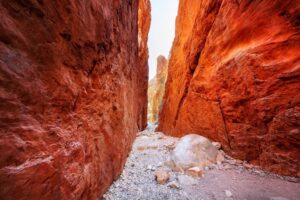
Standley Chasm is an important cultural place of indigenous Australia, sacred to the Arrernte people.
Traditionally known as Angkerle Atwatye, meaning “Gap of Water”, Standley Chasm is a ~3-metre-wide, 80-metre-high gorge amongst the West MacDonnell Ranges.
You have several options here, depending on the experience you are after:
Self-guided Visit
Discover the chasm at your own pace, experiencing the unique beauty of this desert landscape, with its cool shade, ancient gum trees, and native wildlife.
Aboriginal Guided Tour & Talk
The guided tour offers a deep connection to the land as you learn about traditional practices, bush tucker, and the significance of native flora and fauna. Engage in meaningful conversations with the guides, who share personal stories and provide a firsthand account of their cultural experiences. This tour offers a profound opportunity to appreciate and respect the traditions of Australia’s First Nations people, fostering a greater understanding of the deep connection between the land and its indigenous custodians.
Aboriginal Cultural Experience & Workshop
Embark on a captivating journey into Australia’s indigenous heritage with an Aboriginal Cultural Experience & Art Workshop. Immerse yourself in traditional practices through a Welcome to Country ceremony, where local Aboriginal hosts extend a warm greeting. Explore the profound stories of the Dreamtime, gaining insight into the cultural landscape and traditions passed down through generations.
Cultural Immersion Experience Weaponry & Cooking Workshop
Embark on a fascinating Cultural Immersion Experience with Weaponry and Cooking Workshop tour, where you’ll dive into the heart of indigenous traditions. Led by knowledgeable guides, this immersive journey offers hands-on experiences with traditional weaponry, providing insights into ancient hunting and survival techniques.
Following the weaponry exploration, participate in a cooking workshop where you’ll discover the art of preparing food using traditional methods. Learn about bush tucker and indigenous cooking practices, gaining a deeper understanding of the sustainable and resourceful approaches to food in Aboriginal cultures.
Throughout the tour, engage in meaningful conversations, hear captivating stories, and connect with the living traditions of Australia’s indigenous people. This experience is a unique blend of history, skill-building, and cultural appreciation, offering participants a memorable and insightful glimpse into the rich heritage of the land.
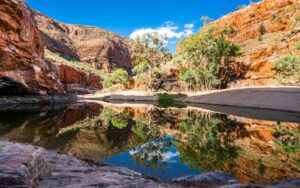
Ormiston Gorge is a spectacular, rugged desert destination in Tjoritja / West MacDonnell National Park, about a 90 minute drive, west of Alice Springs. Famous for its towering red walls and near-permanent, 14-meter-deep waterhole, it offers excellent swimming & scenic hiking trails.
The Waterhole
Just a 500-meter walk from the visitor centre, this cool, scenic oasis is one of the largest permanent waterholes in Central Australia. It features a sandy “beach” perfect for a picnic, though the water can be icy cold and submerged boulders make diving risky.
Ghost Gum Lookout Walk
An easy, accessible walk offering stunning aerial views of the gorge before descending into the rocky creek bed (approx. 1.5 hours).
Ormiston Pound Walk
A 3 to 4-hour circuit that takes you across rocky slopes and the flat floor of the pound, returning via the main gorge.
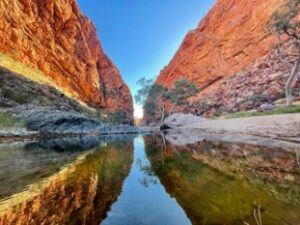
Simpsons Gap is one of the most stunning, accessible gorges in the Tjoritja / West MacDonnell National Park, located just 18 km west of Alice Springs. Famous for its towering cliffs, permanent waterhole, and resident Black-footed Rock-wallabies, it is a must-visit spot in Central Australia.
Known as Rungutjirpa (or Rrengetyirpe) to the Arrernte people, this site is sacred and serves as the mythological home of giant goanna ancestors.
Note: Swimming is strictly prohibited at Simpsons Gap to protect the ecosystem and sacred waterhole.
Walking Tracks (Self-guided)
Take the easy Ghost Gum Walk or the Cassia Hill Walk for fantastic views of the MacDonnell Ranges and ancient flora.
The Gap Walk (Direct Access) – Distance: ~1.2 km return (15-20 minutes): The primary walk from the main carpark to the gap itself is a flat, easy stroll that takes you through a dry creek bed and right up to the spectacular narrow cleft. Walk this at dawn or dusk for the best chance to see rock-wallabies along the rocky slopes.
Cassia Hill Walk Distance: ~1.5 km loop (1 hour): A slightly more elevated trek that takes you through creek beds to the top of Cassia Hill. You will be rewarded with sweeping, panoramic views of the MacDonnell Ranges.
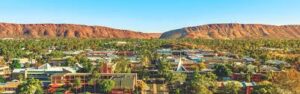
The town straddles the usually dry Todd River on the northern side of the MacDonnell Ranges. The surrounding region is known as Central Australia, or the Red Centre, an arid environment consisting of several deserts.
The Arrernte people are the traditional owners of the Alice Springs area and surrounding MacDonnell Ranges. They have lived in the area for at least 30,000 years. The traditional name for the township area is Mparntwe] (“watering place”), referencing Atherreyurre, a waterhole in the Todd River at Old Telegraph Station (known as Alice Springs). Mparntwe refers to the majority of the Alice Springs township, with two additional names: Irlpme covering the south and Antulye the east.
ANZAC Hill
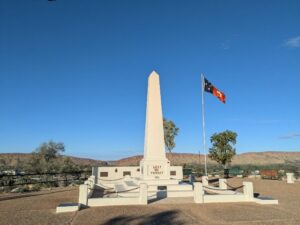
From the top of the hill you’re able to see Alice Springs in full, the McDonnell Ranges and sweeping views of the desert surrounding. But as its name suggests, ANZAC Hill is much more than a spot for an incredible sunset or sunrise, it was also a very important location for the Australian military during World War II as an army base.
Visiting here will not only give you awesome photo opportunities but also a deep understanding of Australia’s fight during the second world war.
The Anzac Hill Memorial was unveiled on 25 April 1934 (Anzac Day) and was originally dedicated to all those members of the armed services who had paid the supreme sacrifice during World War I.
It has now become a memorial to all those who have served in the defence of their country during all wars in which Australia has participated.
Anzac Hill is also of significance to the local Arrernte people, who know it as “Untyeyetwelye”.
Todd River
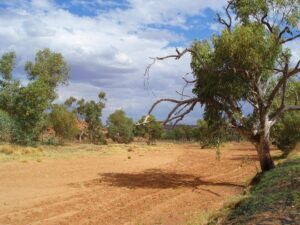
The Todd River in Central Australia is an ephemeral (meaning for a short time, fleeting, short-lived or transitory) river that is completely dry for about 95% of the year. Flowing through Alice Springs, it only holds water as a rushing river following heavy rainfall in the MacDonnell Ranges.
Because Central Australia has a deeply arid climate, the “river” typically exists as a broad, sandy trench. When storms do hit the catchment, the transformation is rapid, with floodwaters sometimes turning the empty bed into a rushing, muddy torrent in a matter of hours.
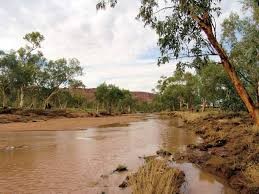
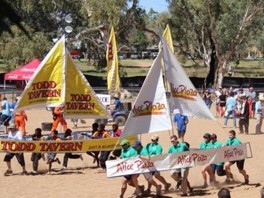
Locals embrace the dry riverbed, famously using it to host the Henley-on-Todd Regatta—a quirky event where participants race bottomless boats through the sand.
Royal Flying Doctors Service Tourist Facility
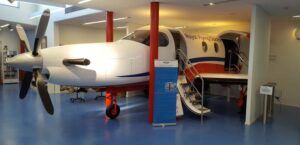
Nestled amongst the rugged terrain of Australia’s red centre, visit the RFDS Alice Springs Tourist Facility.
Experience, through state-of-the-art technology and an immersive museum, the history and growth of the RFDS, and learn why the RFDS in Alice Springs is the pulsating heartbeat of the Outback.
The Royal Flying Doctor Service (RFDS) Alice Springs Tourist Facility offers immersive educational tours for school groups, featuring virtual reality patient experiences, a life-size hologram of founder John Flynn, and interactive museum exhibits. It provides students with a powerful look at aeromedical care in the Outback.
Tour & Group Highlights
- Interactive Learning: Students can explore decommissioned radio rooms, see how the Alf Traeger pedal radio worked, and view a former communications center.
- Replica Aircraft: Groups can step inside a replica RFDS aircraft to experience what it is like being a patient at 15,000 feet.
- Virtual Reality & Holograms: Engage with state-of-the-art technology, including virtual reality flight experiences and a life-size holographic presentation.
School of the Air

Alice Springs School of the Air offers a wide range of educational services and activities to isolated school children from Pre-school to Year 9 and plays an integral part in children’s lives in the Australian Outback.
The school’s Visitor Centre – one of the town’s premier tourist attractions- is located right next to the school itself and provides an opportunity to connect with these children, hear their stories of life on the land, and share in their journeys, dreams, and achievements.
Why not add an immersive tour to your Itinerary!
Alice Springs Telegraph Station Historical Reserve
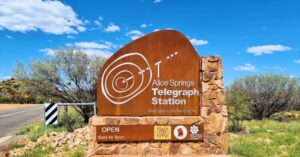
The Telegraph Station, nestled within the Alice Springs Telegraph Station Historical Reserve, stands as the birthplace of Alice Springs.
Established in 1871, it served as a pivotal link along Australia’s Overland Telegraph Line, connecting Darwin and Adelaide. This historic site not only bridged Australia’s population centres but also integrated the continent into the broader telegraph network of the British Empire.
Go beyond a typical museum visit. Delve deeper into the fascinating stories of the station and the township with a daily guided tour.
Alice Springs Reptile Centre
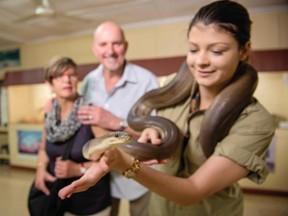
Home to over 100 reptiles, the centre displays its inhabitants in recreations of their natural environment.
Enter the Gecko Cave to see the different species of this diminutive and shy lizard from around Alice Springs, the Barkly Tablelands and the Top End. View Terry the Saltwater Crocodile through glass underground, which gives you a glimpse into his underwater world and offers great photo opportunities. See huge Goannas such as the Perentie as well as the show-off Frill-neck Lizards and desert-dwelling Thorny Devils.
Handle a Python or see the lizards being fed. Some of the world’s most venomous snakes, including Inland Taipans, Brown Snakes, Death Adders and Mulga (King Brown) snakes are on display, safely behind glass.
If you’re visiting during the cooler months (May to August), the recommended viewing times are between 11am and 3pm when the reptiles are most active.
Schedule your visit around an interactive talk and handling session with one of their knowledgeable and passionate staff members, which are conducted daily.
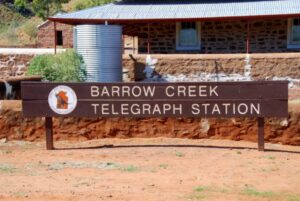
Barrow Creek was named in 1860 by John McDouall Stuart after J H Barrow, a member of the South Australian Parliament.
The site for the Telegraph Station was chosen in September 1871 by John Ross’ Overland Telegraph exploring party, which was assessing Stuart’s route to set up a telegraph line through Central Australia.
The site was chosen due to the presence of surface water and for a well site of about 10 to 12 feet.
By 1880 the station was very much in its present form with an elaborate stone fence, wagon shed, blacksmith’s hut, cemetery and a verandah on the western side of the main building.
A century later the microwave telecommunications link replaced the telephone carrier wave system making the Barrow Creek Telegraph Station redundant.
The Telegraph Station was one of fifteen original stations, three of which are now managed by Parks and Wildlife as Historical Reserves, the other two being Alice Springs and Tennant Creek.
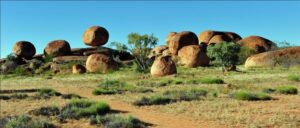
Travellers on the Stuart Highway can experience a range of the Territory’s amazing natural landscapes, especially the impressive sight of the Devils Marbles or Karlu Karlu.
These gigantic boulders have become an internationally recognised symbol of Australia’s outback and are spectacular when the light of the morning and evening sun highlights their deep red colour.
Karlu Karlu translates to ’round boulders’.
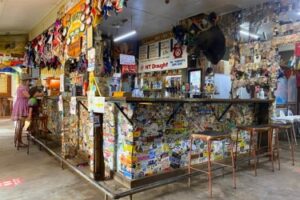
Daly Waters Pub
This Iconic Pub is a must see quirky attraction and not to be missed Tim’s Junk Yard crammed with decades of collectables.
Meet their free roaming animals for the kids – chickens, ducks, horse, donkey, goat, Brahman cattle and Texas long horns. You’ll often see Tim (The Boss) being followed around by Polly the horse and their goat.
In the past the pub has witnessed murders, shoot outs in the main street, cattle stampeding through town and the odd drunken brawls. Station owners threatened to burn the place down or buy it and bulldoze it to stop the local ringers from riding into town, hence the old bath tub & rail to hitch your horse onto.
Today the only shoot out is at the bar during Happy Hour and the only brawling done is between the gangs of Happy Jacks (local birds). Often late at night if alone in the bar you can feel the hairs on the back of your neck stand up. Heavy objects sometimes go flying in the kitchen and it is not the chef. We believe it is Sarah a lady who was murdered here by her husband but he got away with it because he reckoned she was having an affair with the gardener. Many years ago the postmaster was knocked off and his takings stolen the suspect moved from the area and committed suicide many years later.
Daly Waters Airfield
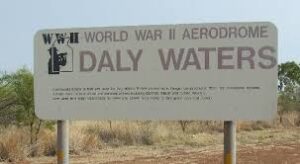
The Daly Waters Airfield, also RAAF Base Daly Waters, is a former commercial and sporadically-used military airfield located at Daly Waters. As an airfield on Australia’s earliest international routes, Daly Waters was used throughout the 1920s and 1930s as a stop over for commercial airlines operating on the domestic route to Western Australia and international carriers flying from Australia into south-east Asia via Darwin. During World Water II, the airbase was used by the Royal Australian Air Force and the United States Army Air Force to undertake combat operations against the Japanese in New Guinea, the Dutch East Indies and the islands to Australia’s north. Following the war, the airbase was used commercially again up until the 1970s when the airfield was sporadically used by the RAAF.
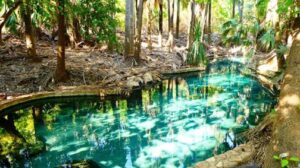
Mataranka Thermal Pool is one of two natural thermal pools in Elsey National Park. The water is crystal clear and very warm year round.
The Pools have seats, stairs and more of a pool feeling, where you can float and chat to your friends. The pools have been done in a natural way to preserve the area.
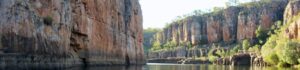
Be drawn to the spectacular sandstone country of Nitmiluk National Park and the majestic Nitmiluk (Katherine) Gorge with spectacular cliffs that glow in the changing light.
Nitmiluk National Park, just 30km north-east of Katherine, covers a vast area, including 13 impressive gorges carved from the ancient sandstone country which stretch for as far as the eye can see.
NitNit Dreaming 2 Gorge (Cruise) Tour
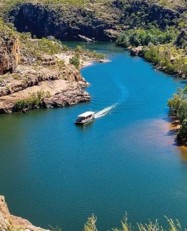
This cruise will allow you to discover the cultural significance of two gorges to the traditional land owners the Jawoyn people. You will be enlightened by the history and traditions of the Indigenous inhabitants.
A popular 2-hour cruise where you glide through two gorges. You will transfer between two boats by taking a short, 400-meter walk along a paved but slightly uneven path while the crew shares Indigenous Dreamtime stories and local ecology.
Cutta Cutta Caves Nature Park – Guided 1-hou Tour
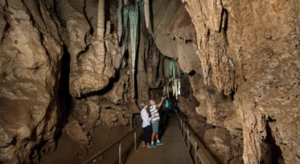
Delve 15 metres below the surface to discover amazing limestone caves in the heart of Australia’s Top End.
Formed millions of years ago, the Cutta Cutta Caves system is home to a variety of native wildlife and has a rich Indigenous culture and modern European history.
Your Guided tour will take approximately 1-hour and a minimum of 1500 metres of walking is required.
Canoeing on Katherine River (Teacher Supervised)
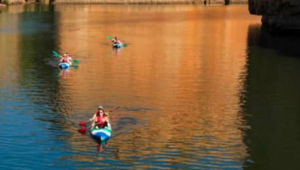
On this self-guided adventure, you can travel at your own pace, admiring the stunning scenery and local wildlife. Take a picnic to enjoy on the riverbanks and cool off with a swim at one of the many swimming spots along the way.
If you are a larger group, you may need to split into 2-3 groups, depending on canoe availability.
Canoe hire:
- Can be for a half day (8.00am – 1.00pm) or a whole day (from 8.00am).
- Canoes are either 1 or 2 seaters, with preference for students to in 2-seaters and teachers in 1-seaters.
Litchfield National Park is a 1,500-square-kilometre natural wonderland in the Northern Territory, located about 60 to 90 minutes south of Darwin. Famous for its stunning waterfalls, crystal-clear plunge pools, magnetic termite mounds, and ancient sandstone pillars, it is a premier destination for both day trips and camping.
Litchfield National Park is an ancient landscape shaped by water.
Aboriginal people have lived throughout the area for thousands of years. It is important to the Koongurrukun, Mak Mak Marranunggu, Werat and Warray Aboriginal people.
Their ancestral spirits formed the landscape, plants and animals and are still present in the landscape today.
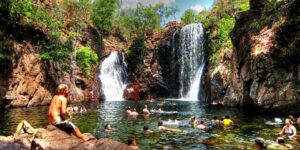
Walking is really a great way to discover the wonders of Litchfield National Park. There are several short, well signposted walks across the Park covering a range of habitats, landscapes and views, typical of the Top End.
Shady Creek Walk (Florence Falls area) Distance: 1 km one way Time: 30 minutes Grade: 3 – Moderate
Start at Florence Falls Picnic Area or the Plunge Pool. This beautiful walk along Shady Creek is a good alternative to the main track to the plunge pool that has 160 stairs! Signs along the way introduce you to the cool and inviting monsoon forest and the savanna woodland.
Florence Creek Walk Distance: 3.2 km return Time: 1.5 hours Grade: 2 – Easy
Start at the Florence Falls Picnic Area or Buley Rockhole. This walk follows Florence Creek between Florence Falls and Buley Rockhole.
Tolmer Creek Walk Distance: 1.5 km Time 45 minutes Grade: 3 – Moderate (rocky in parts)
Start at Tolmer Falls carpark. A pleasant alternative route back to the car park from the Tolmer Falls Lookout takes you through typical Top End sandstone country and along Tolmer Creek and a tributary. Swimming is not permitted.
Wangi Falls Walk Distance: 1.6 km return Time: 1 hour Grade: 3 – Moderate (steep in sections)
Start at Wangi Plunge Pool. The walk takes you to a viewing platform at the base of the falls, through a monsoon forest, then via stairs up to the escarpment so you can enjoy the peace of the stone country above the falls. Swimming is not permitted above the falls.
Walking is really a great way to discover the wonders of Litchfield National Park. There are several short, well signposted walks across the Park covering a range of habitats, landscapes and views, typical of the Top End.
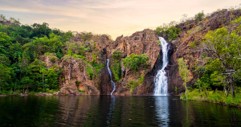
Tjaetaba Falls Walk Distance: 2.7 km return Time: 1.5 hours Grade: 3 – Moderate (steep in sections)
Start at the Greenant Creek picnic area. This shady walk fringes the monsoon forest and creek upstream, climbs steeply to Tjaetaba Falls, then up to a tiny pool above the falls, where you can dip your toes to cool off – swimming is not advised. Greenant Creek and the area downstream of the Falls is a sacred site – please show your respect by not swimming here.
Cascades Walks Lower Cascades Walk Distance: 2.6 km return Time: 1.5 hours Grade: 4 – Moderate to Difficult
Start at the carpark. The quickest way to Cascades Creek is via this shady walk; however it’s closed during the wet season due to flooding and an increased risk of crocodiles.
Upper Cascades Walk Distance: 3.3 km loop (dry season) 3.6 km return (wet season) Time: 2 hours Grade: 4 – Moderate to Difficult
Start at the carpark. Takes you up onto the Tabletop Plateau, several vantage points provide sweeping views of the lowlands below. The walk can be hot and exposed, so be prepared and take adequate water.
Walker Creek Walk Distance: 3.5 km return Time: 2 hours Grade: 3 – Moderate
Start at the carpark. A wonderful walk along a crystal clear creek. You can swim in the creek near the picnic area or at a shared camping and swimming hole at the end of the walk. Please respect the privacy of campers along the way.
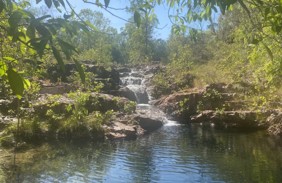
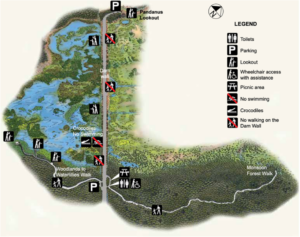
Fogg Dam Conservation Reserve is only a 45-minute drive from Darwin. It is one of the most accessible places in the Northern Territory (NT) to experience spectacular wetlands and wildlife throughout the year.
If you’re a keen bird watcher, there are often a variety of birds around the dam wall. It is also a haven for water pythons, freshwater turtles and other wildlife.
Fogg Dam has one of the world’s highest biomass of predator (water pythons) to prey (dusky rats) ratio. They make their homes in the cracked mud during the hot Dry Season from August to October, while waiting for the rains.
There are several walks through monsoon and floodplain habitats.
If your time is limited, don’t miss visiting the bird hides on the dam wall or Pandanus Knoll Lookout, which looks over the wetlands and is spectacular at sunrise and sunset.
Fogg Dam is located on the traditional lands of the Limilngan-Wulna people, who are active in the reserve’s management.
The dam was built in the mid 1950s to provide irrigation for the Humpty Doo Rice Project. The RAAF Airfield Construction squadron built the dam and named it Fogg Dam after the Managing Director, Mr J D Fogg, of Utah Australia Ltd. When the agricultural scheme failed the dam had already become a dry season refuge for wildlife, especially waterbirds. Fogg Dam was declared a Bird Protection District in 1959 and later a Conservation Reserve in 1982.
Crocodiles
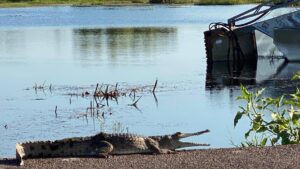
Both freshwater and dangerous saltwater (estuarine) crocodiles inhabit the waters of Fogg Dam Conservation Reserve year-round.
Because crocodile sightings are common, especially near the water’s edge and along the dam wall, you must strictly follow these safety rules:
- Stay in your vehicle: Driving slowly across the dam wall is the safest way to view the wildlife.
- Do not walk on the dam wall: Walking on foot across the dam wall is highly dangerous and explicitly prohibited.
- Stay away from the water: Keep at least 5 metres clear of the water’s edge. Use the fully fenced and shaded viewing platforms.
- Heed the warning signs: Rangers actively manage the dam and set crocodile traps; obey all posted Be Crocwise signs.
Walks at Fogg Dam
Woodlands to Waterlilies Walk Length: 2.2 km return Time: 45 minutes – easy
Leads you through forests that fringe the floodplains. A boardwalk takes you onto the Dam. There are signs and lookouts along the way.
Monsoon Forest Walk Length: 4.4 km return Time: 1.5 hours – easy
Winds through a variety of habitats, including monsoon and paperbark forests, and then onto the floodplains. There are signs along the way. – easy Dam Wall Access – shaded bird viewing platforms are located along the dam wall. You will need to park your vehicle on the dam wall to access these. Park and access with care. Pandanus Lookout – wonderful views of the Dam. Great for sunset or sunrise picnics. Parking available.
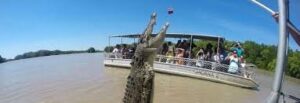
An Adelaide River Jumping Crocs Cruise is well known for its high concentration of saltwater crocodiles, along with other wildlife including white-bellied sea eagles, whistling kites, freshwater crocodiles, bull sharks and Black Flying-fox. Waters of this river are also home to endangered speartooth shark and critically endangered large tooth sawfish. You never know what you might see, so keep a keen eye!
In this one hour cruise on the Adelaide River, you will view WILD Saltwater Crocodiles & their amazing hunting techniques. All of their staff are avid wildlife guides that know the crocs individually by name and personality!
They offer the crocodiles a taste of buffalo meat in return for them swimming out to say hello and showing their incredible hunting techniques.
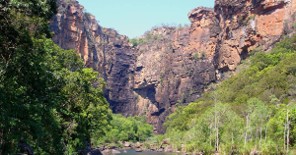
Kakadu National Park, located 150 km east of Darwin in Australia’s tropical north, is a massive World Heritage-listed reserve spanning nearly 20,000 square kilometres. Jointly managed by its Bininj/Mungguy Traditional Owners and Parks Australia, the park is famous for ancient Aboriginal rock art, diverse wildlife, including saltwater crocodiles, and striking landscapes ranging from floodplains to rugged escarpments.
Yellow Water Billabong Cruise
The Indigenous-owned Yellow Water Cruises takes you on a discovery tour through the rich wildlife, dramatic scenery and ever-changing landscape of world-famous Yellow Water Billabong.
Sunrise to sunset, the cruise winds its way through distinct ecosystems of Yellow Water Billabong and tributaries of the South Alligator River.
Yellow Water Cruises has exclusive use of Yellow Water Billabong.
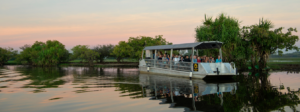
Warrandjan Aboriginal Cultural Centre
Nestled near the lively Ngurrungurrudjba (Yellow Water Billabong) in Kakadu National Park, Warradjan Cultural Centre is a living space for sharing culture, history, and art. Created by the Bininj/Mungguy people, Warradjan tells the stories of Country, Dreaming, and the unbroken connection of Aboriginal people to these lands for over 65,000 years.
Here, visitors can walk through interactive displays, meet artists, and discover weaving, painting, and sculpting traditions that continue to thrive today.
Sitting in Circles
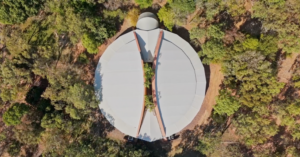
The idea for Warradjan was born in the late 1980s, when Bininj/Mungguy sat in circles to discuss how the centre should look and feel. Circles are at the heart of Bininj/Mungguy gatherings — a symbol of equality, listening, and shared knowledge.
It was decided that the building itself should be round, like people sitting together. Later, the community saw the shape as reflecting the warradjan (pig-nosed turtle), a species found in nearby billabongs. In 1995, after years of consultation, Warradjan Cultural Centre was opened as both a museum and meeting place.
The Display
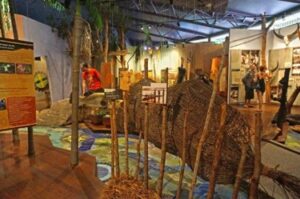
The exhibition inside Warradjan was shaped directly by the voices of Bininj/Mungguy. Traditional Owners worked with designers to ensure the displays spoke with authenticity and respect.
Visitors journey through stories of creation, law, land, and life, moving as the Rainbow Serpent once moved across Country. Artefacts on display include goose-hunting platforms, dilly bags, pandanus baskets, and bark paintings — all made by Bininj/Mungguy hands.
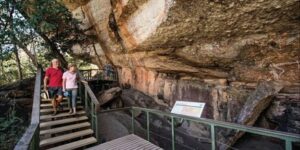
Burrungkuy is a spectacular sandstone outcrop in the Northern Territory’s Kakadu National Park. Renowned for its ancient Indigenous rock art, deep cultural significance, and stunning escarpment views, it is a World Heritage-listed site that showcases over 20,000 years of continuous Aboriginal occupation.
The Walks
The Rock Art Walk: A 1.5 km circular trail takes you through outdoor galleries and shaded shelters. The most famous is the Anbangbang Gallery, featuring ancient paintings of Creation Ancestors like Namondjok and the Lightning Man, Namarrkon.
Kunwarddewardde Lookout: Accessible from the main walk, this vantage point provides sweeping, panoramic views of the Arnhem Land escarpment and the surrounding savanna woodlands.
Nawurlandja Lookout: A short distance from the main site, this lookout offers magnificent sunset views of the sandstone cliffs and the Anbangbang Billabong.
Ubirr Rock is an iconic, ancient Aboriginal rock art and cultural site located in the East Alligator region of Kakadu National Park in Australia’s Northern Territory. It is world-renowned for its extensive, remarkably preserved rock art.
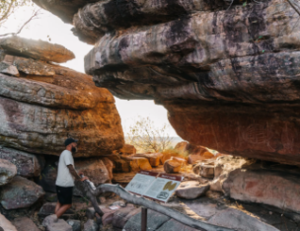
Why Ubirr is famous:
- Ancient Art: The sandstone rock outcrops feature art continuously painted and repainted for over 40,000 years.
- X-Ray Art: Famous for its unique style that depicts both the internal organs and skeletal structures of animals and humans.
- Contact Art: Some galleries feature fascinating depictions of early European settlers and explorers dating back to the 1880s.
- Extinct Animals: There is a distinct painting of a thylacine (Tasmanian tiger), an animal that became extinct on the Australian mainland over 2,000 years ago.
Visiting the Site:
- The Main Walk: A 1 km circular track weaves past the primary art shelters. This allows you to easily view the Main Gallery, Rainbow Serpent Gallery, and Mabuyu.
- The Lookout: A short but slightly challenging 250 m rocky climb takes you to a spectacular high-vantage lookout. It offers sweeping, 360-degree views over the lush Nadab floodplain and the Arnhem Land escarpment
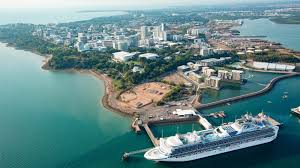
Darwin is the northern most capital city of Australia. With a rich history and iconic natural sights such as Kakadu and Litchfield National Parks and Katherine Gorge right on its doorstep, Darwin is the best place to explore and experience the Top End of Australia.
Darwin’s year round warm weather creates a relaxed atmosphere and is perfect for those who enjoy an outdoor lifestyle. Head down to the waterfront precinct and find the city’s buzzing cafés, bars and restaurants. There’s also a giant wave pool that the kids (and adults) will love!
The city has a dramatic history encompassing the tragic WWII bombing of Darwin and the devastation of Cyclone Tracy in 1974.
Crocodylus Park
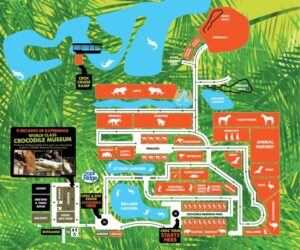
In case you haven’t already seen enough crocodiles on your tour, then why not add a visit to Crocodylus Park to your Itinerary.
Darwin’s premier wildlife park, featuring thousands of crocodiles from cute li’l hatchings to snappy big ‘uns!
Founded by Darwin based world-renowned crocodile biologist Professor Grahame Webb, the park is also home to lions, meerkats, spider monkeys, marmosets, cassowaries and more!
Crocodylus Park is a premier wildlife park and research facility located in Knuckey Lagoon, Northern Territory, just 15 minutes from Darwin’s CBD. Home to over 10,000 crocodiles, as well as lions, primates, and birds, the park offers daily crocodile feeding tours, jumping croc cruises, and interactive animal encounters.
Key Highlights
- The Crocodiles: See everything from 30cm hatchlings to 5-meter, half-ton saltwater crocodiles.
- The Zoo: It features Darwin’s only zoo, housing exotic and native wildlife like big cats, meerkats, dingoes, and monkeys.
- The Museum: Tour the world-class Crocodile Museum to learn about the history, biology, and conservation of these apex predators.
- Interactive Tours: Visitors can take “Jumping Crocodile” river cruises and participate in scheduled feeding demonstrations (not included in entry (extra cost)).
Mindil Beach Sunset Market

The Mindil Beach Sunset Market has become an iconic experience for travellers to Darwin. With their unique blend of culture, cuisine and entertainment, it offers something for everyone and let’s not forget, Mindil Beach is well known for its tropical ocean sunsets.
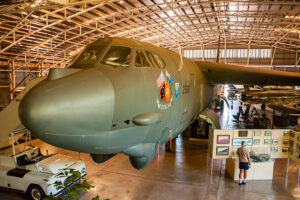
Darwin Military Museum
Step into the heart of Australia’s wartime history at the Darwin Military Museum and Defence of Darwin Experience, where powerful stories and immersive displays bring the events of World War II to life.
Located within the historic East Point Military Precinct, this remarkable site places you right where Australia’s northern defences once stood – surrounded by original gun emplacements, military artefacts and sweeping coastal views that once guarded Darwin Harbour.
Inside the Defence of Darwin Experience, explore the Bombing of Darwin Gallery, watch gripping multimedia presentations and hear first-hand accounts from those who lived through the attacks. Then, wander the museum grounds to discover thousands of artefacts – from artillery pieces and vehicles to uniforms, models and artworks – each revealing a unique part of Australia’s story at war.
The Darwin Military Museum has deep roots of its own. Established by the Royal Australian Artillery Association (NT) in 1969, following efforts to preserve the site’s original wartime structures and artefacts. What began as a small local initiative has grown into one of the Top End’s most significant heritage attractions, continuing to honour the people and places that shaped Australia’s northern defence.
They recommend allowing 3 hours for your visit
They recommend allowing at least 3 hours to visit the Darwin Military Museum, which features the Bombing of Darwin Experience and the Darwin Holocaust Memorial and Education Centre.
Transformative Journey
Our safari guided tours combine geography, Indigenous culture, and natural sciences in an unforgettable cross-continental expedition.
Related Safari Tours
Explore more safari excursions:
- Rock to Reef – Uluru to Great Barrier Reef
- Red Centre Highlights – 7-day adventure
Our school tour operators deliver exceptional educational tours Australia experiences.
Contact us to plan your outback safari.
Contact Us
Have questions or need a quote? Call us today or send us a quick message we’ll respond within one business day.
"*" indicates required fields